

How Is Mother’s Property Divided After Her Death in India?
Who gets mother’s property share after she passes away? Is it only children, or can someone else also claim their authority? Losing any of your parents is a devastating and heartbreaking incident. But this is how nature works, and we have to run parallel. In addition to that, property matters are also part of our daily life.
And leaving it as is after your mother passes may lead to future disputes among your family members, including your siblings. In today’s blog, we will answer all such questions and guide you through the actual process.
Who has right on mother's property?
As per Indian law, when a woman acquires property—regardless of its status such as self-bought, inherited, or acquired through a will—she holds absolute authority over those assets. And no one, including her husband, children, or anyone else, has a right to her estate.
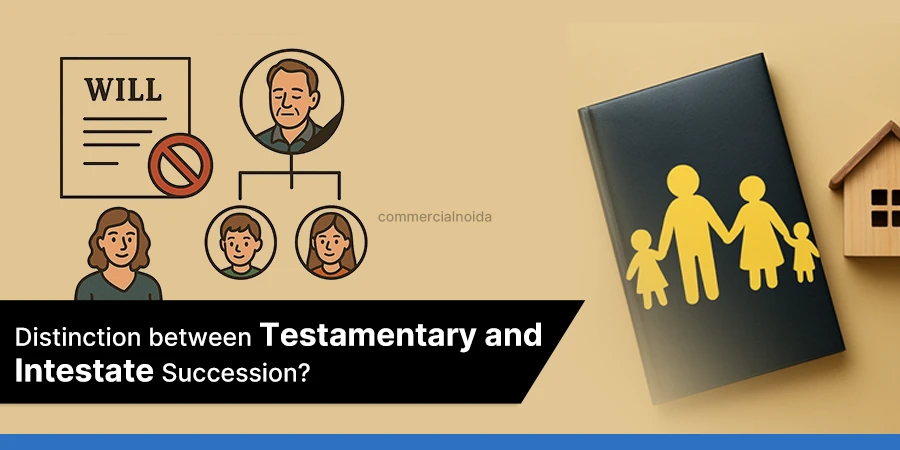
If a woman dies with a will, it is called testamentary succession, which means her property will be distributed or passed on as per the clauses mentioned in the will. But the problem occurs if she dies without leaving a will.
What if a woman dies without a will?
If a woman dies without a will, her property is distributed as per Hindu succession act 1956 and 2005’s amendment. This act applies only on Hindu, Sikh, Jain, Buddhist. When a Hindu woman dies without a will (intestate), her property is inherited in this order as a simple set of steps:
First it goes to class I heirs, her sons and daughters (including grandchildren of any pre-deceased child), along with her husband, all share the property equally. If none of these heirs are alive, the estate then goes to the heirs of her husband.
If there are no heirs on the husband’s side, the property moves next to her own parents. And if neither parent is alive, it is passed on to the heirs of her father, and if there are still none, it finally goes to the heirs of her mother.
How muslim familes shares are devided?
Fixed shares for close relatives
Muslim inheritance law—based on the Quran and Sunnah—uses fixed shares for certain relatives. These include the deceased’s husband, children, and parents. Once these fixed shares are given, any remaining property goes to other relatives according to their family connection.
The mother’s share
If a Muslim woman dies and she has children, her own mother (the deceased’s mother) receives one-sixth of the estate. If she had no children, her mother gets a larger share one-third. A single daughter only receives half the estate. If there are multiple daughters, they share two-thirds together. When sons are present, daughters receive half the share of sons.
The surviving husband also gets a fixed share: One-quarter of his wife’s estate if she has children and One-half if there are no children.
Christian inheritance
When a Christian woman dies without a will, her estate is shared under the Indian Succession Act, 1925. If she has a husband and children, the husband (widower) gets one-third, and the children share the remaining two-thirds equally.
If she has no children, the husband receives one-half, and the rest goes to her parents or siblings. If there’s no husband or close relatives, the widower gets the whole estate. These rules apply equally to a widow or widower of any gender, with spouses treated the same under Sections 33–35 of the Act.
Parsi inheritance
If a Parsi woman dies without a will, her property distribution follows Sections 50–56 of the Indian Succession Act, 1925. If she leaves behind a husband and children, the husband and each child receive equal shares. If she has children but no spouse or parents, the children share equally.
If she leaves parents along with spouse and children, each parent gets half the share of each child. If she has no spouse or children, the parents inherit first, then other relatives in order under Schedule I.
Other religions (e.g., Jains, Sikhs, Buddhists)
These religions follow the Hindu Succession Act, 1956, so inheritance rules are the same as for Hindus. That means her children, husband, and mother inherit equally as Class I heirs, and if none exist, it goes to the husband’s heirs, then her parents, then her father’s and mother’s heirs.
In short, being literate with who inherits a mother’s property after her death depends on her religion, whether she left a will, and the specific succession laws in place. From fixed shares in Muslim law to the structured hierarchy under Hindu and Christian succession acts, each has unique rules. It’s always wise to resolve property matters legally and early to avoid family disputes and ensure rightful inheritance.


.webp)































































































































































.webp)





























































































.webp)














































































.webp)